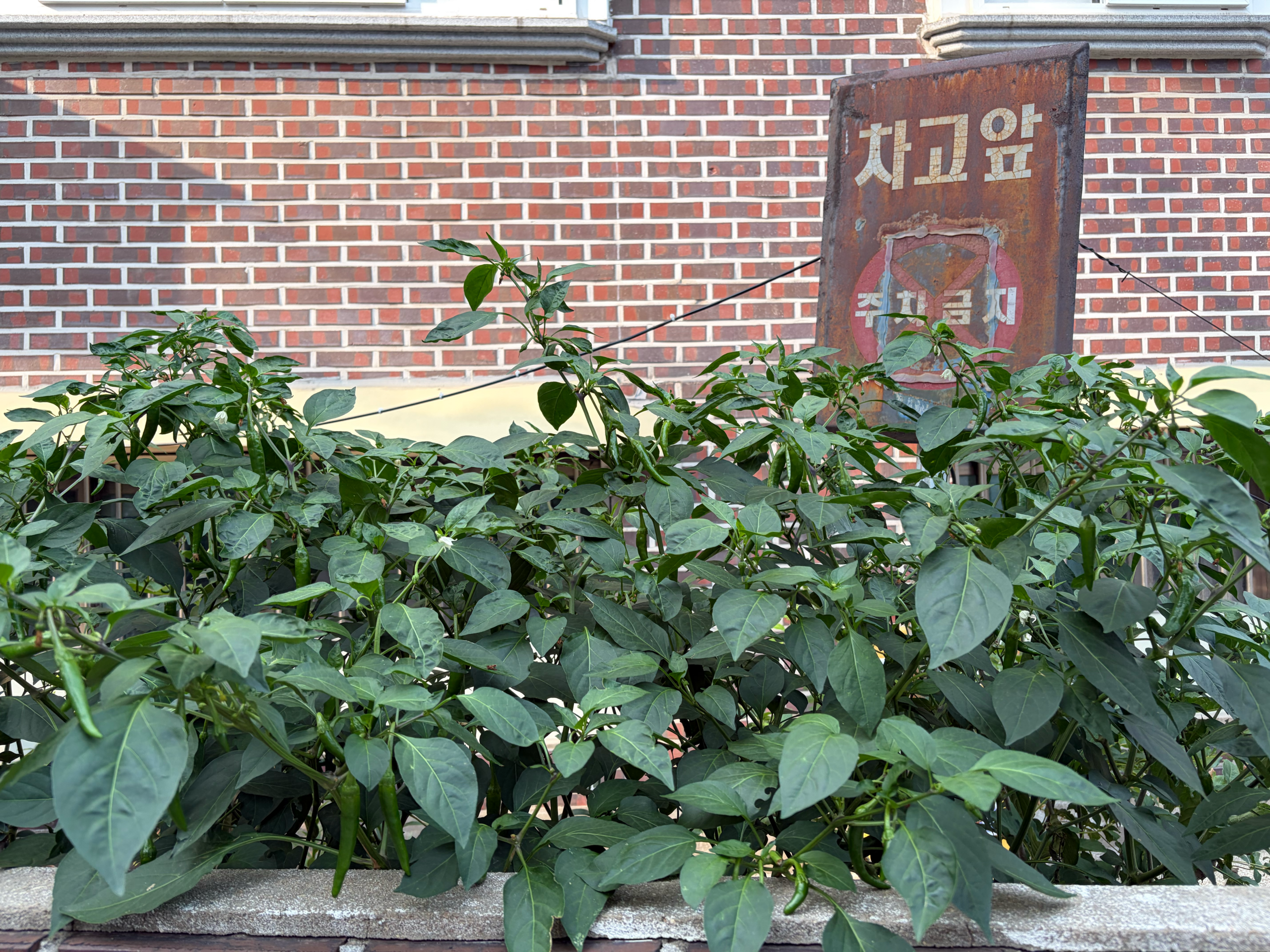
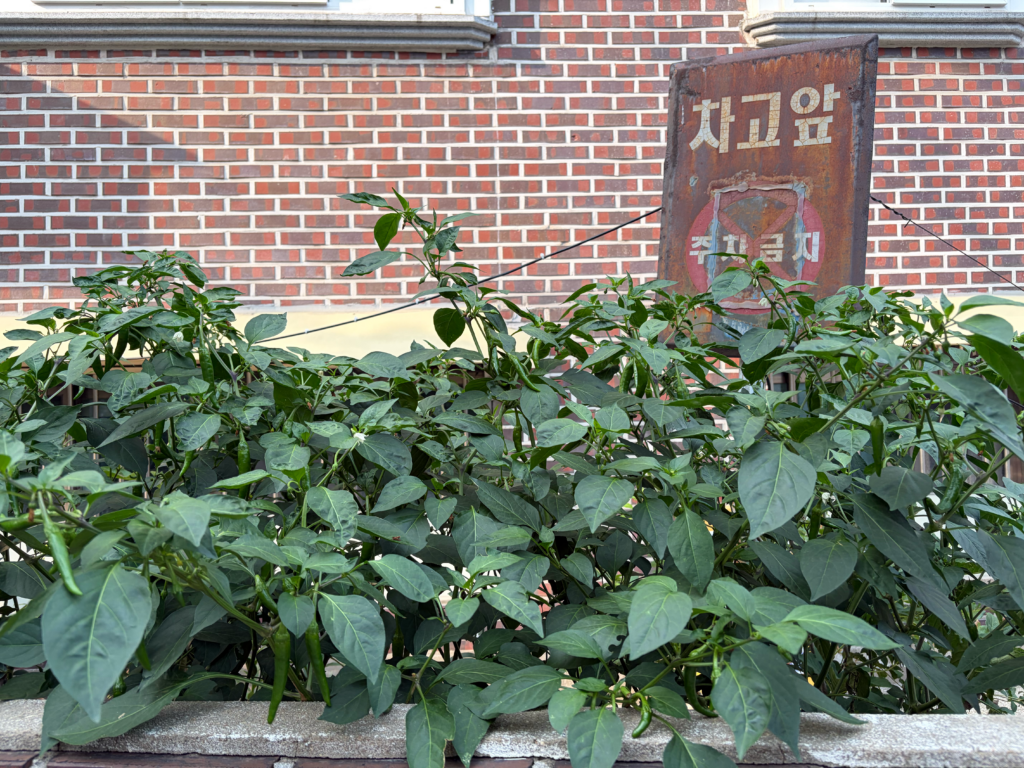
Vegetable gardening in Seoul, South Korea
In the United States, we tend to think that growing our own food requires space – a plots, rows, beds. Years of living in Seoul, South Korea, taught me that just isn’t the case.
I was reminded of this again during a recent trip to Seoul. In a city where apartment buildings of 20 stories or more spring up among the squat, older villas that line narrow, winding streets, gardeners find ways to grow – balconies, windowsills, ledges; pots and built-in planters.
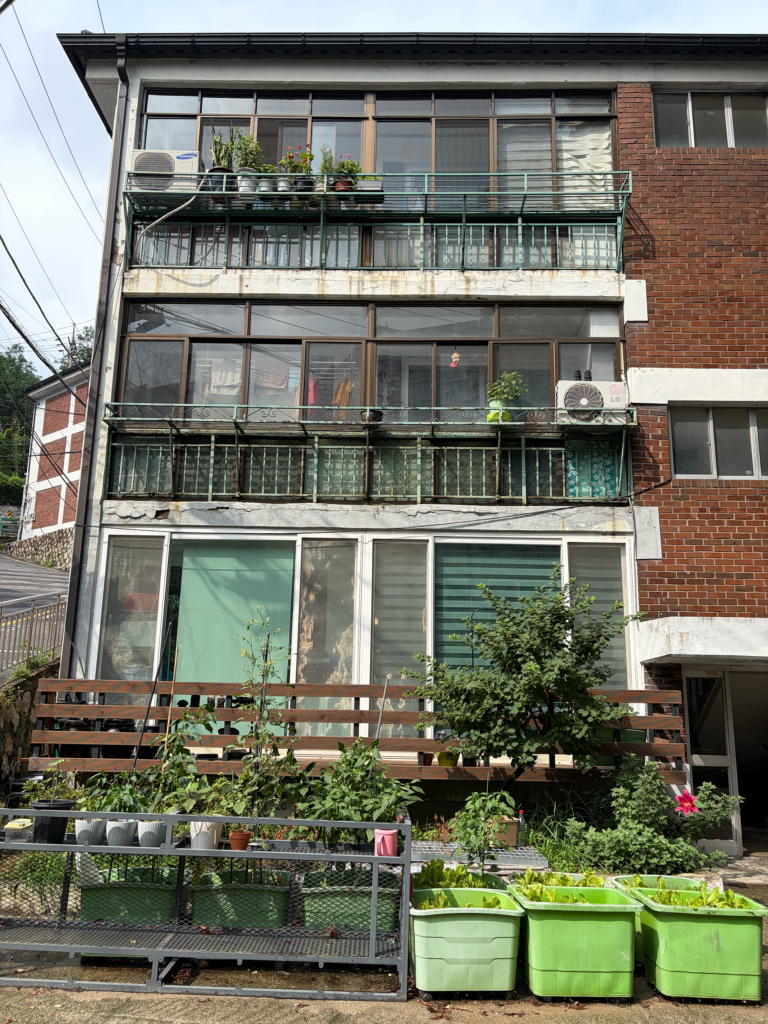
Anything’s a pot in South Korean gardens!
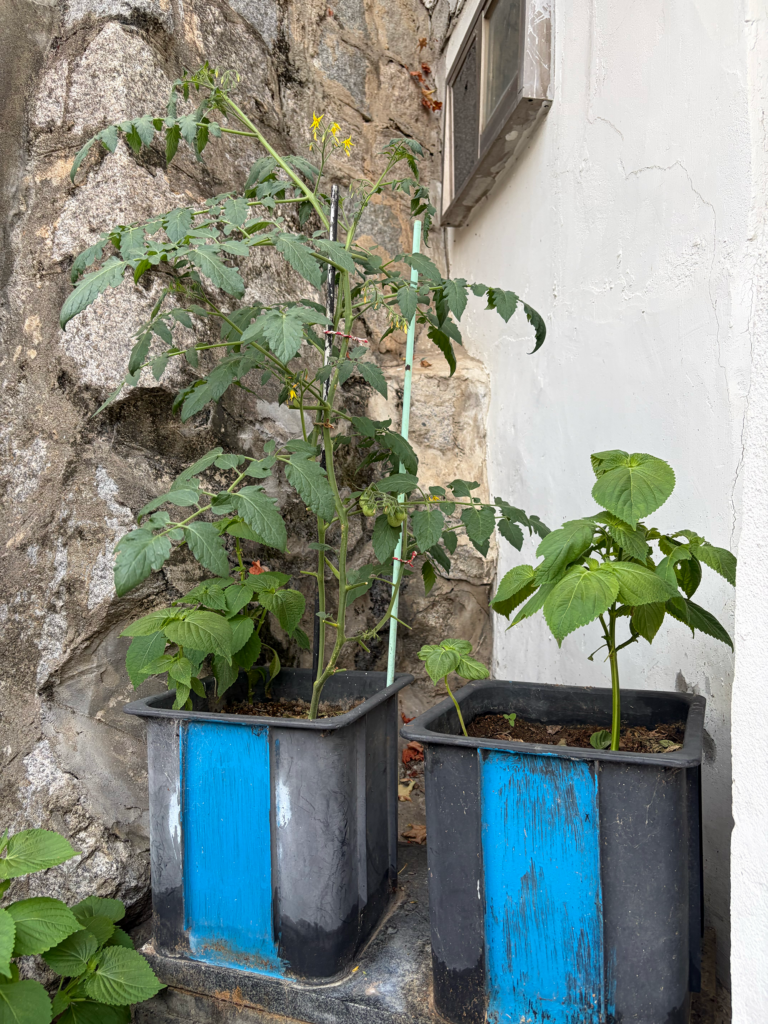
Gardens in South Korea are different from the ones an American might be used to. For one thing, although they’re often beautiful, there’s less focus on aesthetics in many cases. This is especially true of the pots. I’ve seen plants grown in plastic tubs and styrofoam coolers, presumably discarded from food deliveries. I personally grew many plants in discarded wooden wine cases I picked up outside a restaurant down the street from an apartment where I lived near Namsan.
This flexibility in garden container type is kind of key because one of the biggest hurdle to me for container gardening has always been the cost of pots. Even grow bags, among the cheapest (and least aesthetic) containers for gardening, add up quickly in cost and they don’t usually last a great length of time, especially in a place as humid as Houston.
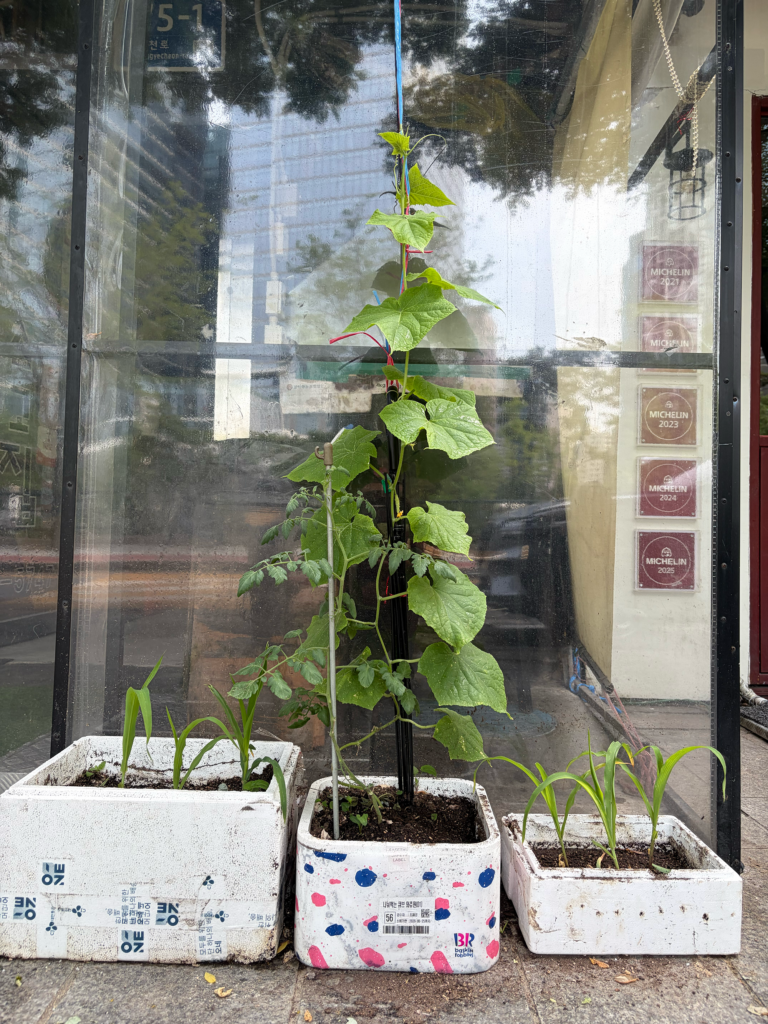
What does using plastic or styrofoam pots mean for your body? While I share concerns about microplastics in general, for me this falls into the “I’m not going to worry about it” category. It’s almost certain that fruits and vegetables grown on my doorstep are going to have less contact with plastics and damaging chemicals in general than anything I buy at a supermarket.
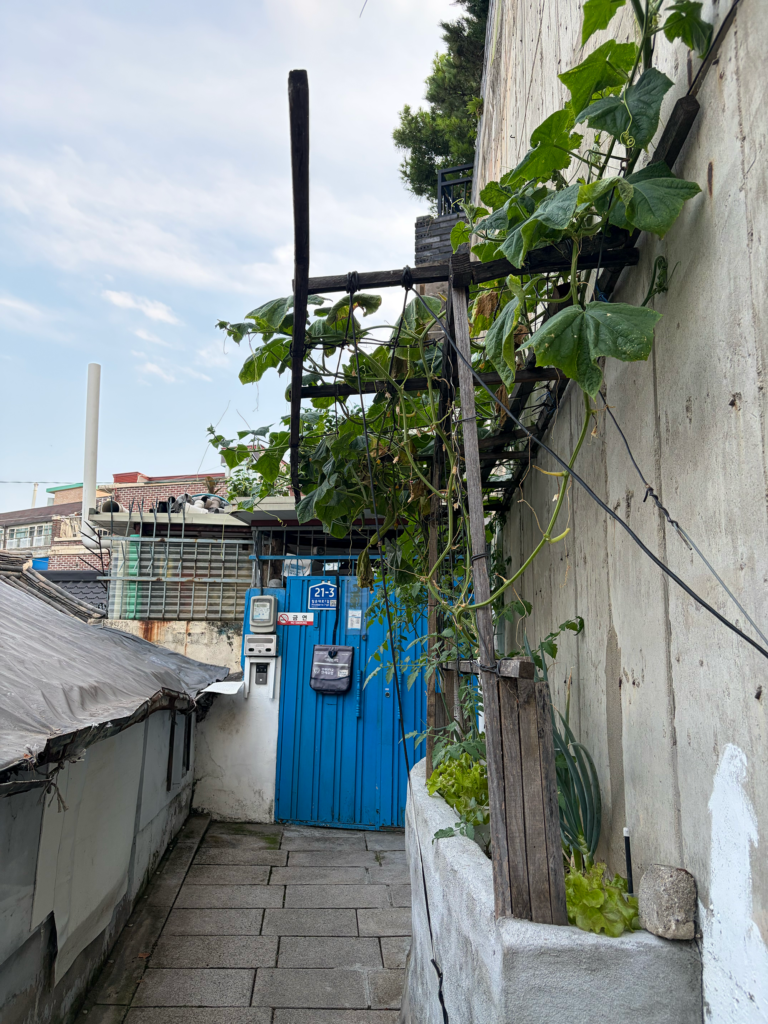
Korean vegetable gardens are often public!
Another difference is that gardens in South Korea are mostly public. In the US, even in a lot of places in big cities, there’s some kind of front of the building where you’re meant to have purely decorative plantings, whether pots on a stoop or a lawn with flowering borders and a line of foundation-plant bushes. Vegetable gardens in much of the United States are relegated to back or side yards (and this is especially true in Texas, where I’m a true revolutionary in my neighborhood with my front-yard tomato beds). In South Korea, often the only outdoor space is out front, visible to every passerby – much to my delight! (That is, after all, how I was able to take all of these photographs.)
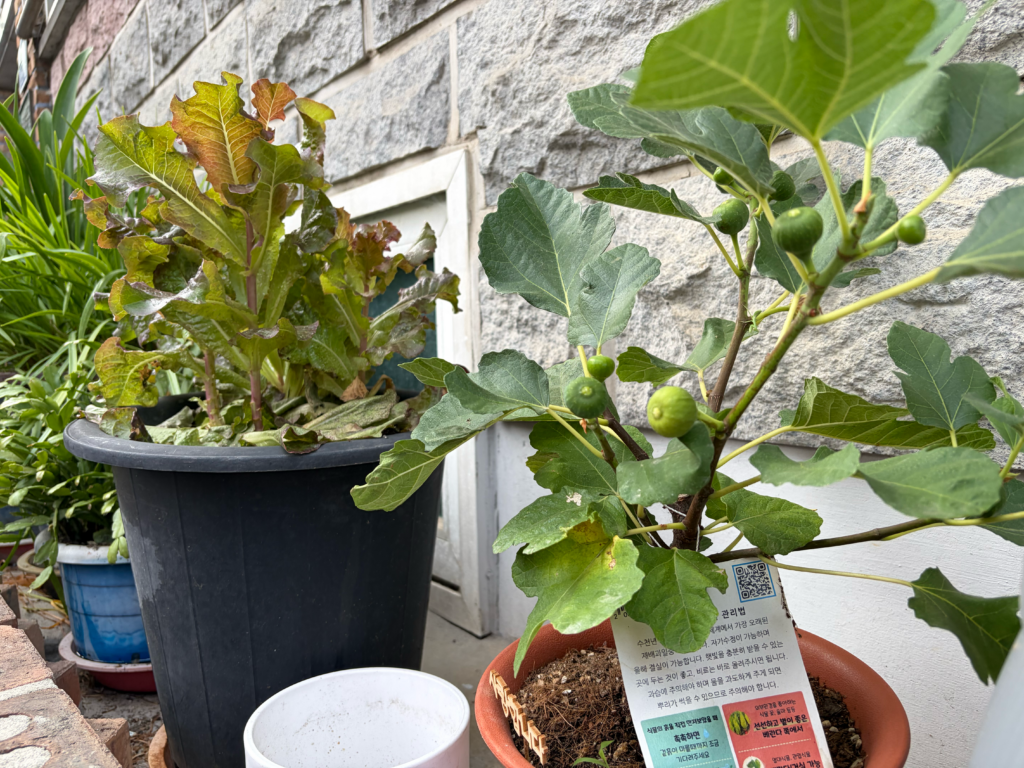
Vegetables aren’t the only thing grown in container gardens in South Korea – fruit is, too! Above you can see a fig, neatly pruned into a small form but still producing. In other neighborhoods, fruit trees grow directly in the ground – persimmons especially, which splat to onto the pavement in the fall if not picked in time.
Gardens in Seoul are on a smaller scale
A third way vegetable gardens in Seoul, South Korea, differ from the expectations of gardeners from places like the United States is in their scale. Unsurprisingly, vegetables grown exclusively on pots are going to have size limits. While this doesn’t really make any difference when growing something like lettuce or green onions, it can make a big difference when growing something like a tomato, some varieties of which can grow up to 9 feel tall, or a fruit tree (highly recommend Grow a Little Fruit Tree by Ann Ralph for anyone thinking of small-space fruit tree planting!).
Don’t be afraid to go small in gardening
To me, the big takeaway from Korean vegetable gardens is to not be a afraid to go small. Not just small gardens – but also small pots (these pots definitely don’t meet the size standards of pots for tomatoes in the American container gardening books I’ve read, for example), small prices (go for those free or cheap pots, even if they’re ugly!), and plants (prune away). Very few of us, especially living in a big city, are going to replace all or even most of our food needs with stuff we grow in our gardens, but even a small vegetable garden can give you plenty of mental and physical health benefits, plus the mental and physical pleasure of watching things grow and tasting your produce.
Leave a Reply